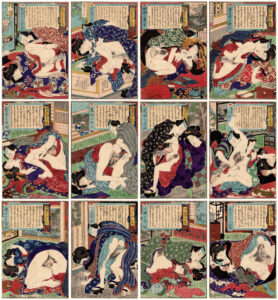
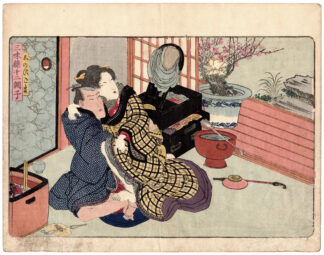
Kuchi-e, literally translating to “mouth pictures,” are Japanese woodblock-printed frontispiece illustrations designed to open a book or literary magazine. Positioned before the main text begins, these works act as a visual threshold that anticipates the atmosphere, characters, and emotional tone of the volume.
While many collectors associate the term exclusively with late nineteenth- and early twentieth-century printmaking, kuchi-e actually encompasses two closely connected historical traditions. Understanding both meanings clarifies how the format evolved from Edo-period book illustration into one of the most refined genres among the various types of Japanese woodblock prints.
Origins in Edo-Period Illustrated Books
During the Edo period (1603–1867), the word kuchi-e simply designated the opening illustration bound directly into the beginning of a woodblock-printed book. Publishers included these frontispieces across a wide spectrum of volumes, ranging from popular fiction and poetry anthologies to illustrated albums and erotic shunpon books.
Bound into the spine of the volume, Edo-period frontispieces could span a single page, a double-page spread, or an extended four-page panorama with folded inner flaps that opened out to reveal a wider composition. Even in erotic shunpon volumes, the kuchi-e rarely depicted explicit sexual acts; instead, it served as a narrative prelude, introducing the main characters in detailed portraits, offering symbolic motifs, or setting a poetic, suggestive mood before the explicit scenes unfolded.
Meiji and Taisho Literary Frontispieces
By the Meiji (1868–1912) and Taisho (1912–1926) eras, the meaning of kuchi-e narrowed and became most commonly identified with large, separately printed fold-out frontispieces created for literary magazines—such as Bungei Kurabu—and serialized novels. Leading artists including Takeuchi Keishu, Tomioka Eisen, and Mizuno Toshikata specialized in these romantic, psychological, and domestic scenes.
Because these standalone plates were larger than the publications that housed them, binders folded each sheet two or three times to fit inside the magazine or book. Today, authentic Meiji and Taisho kuchi-e retain those original vertical and horizontal fold lines as an integral mark of their publishing history.
Technical Refinement and Collecting Kuchi-e
Meiji-era kuchi-e are celebrated for their extraordinary technical delicacy. Printers used subtle bokashi color gradations, blind embossing (karazuri), and shimmering metallic or mica accents to capture the quiet introspection of modern heroines and seasonal landscapes.
For collectors, appreciating the dual history of the term explains why an archive of kuchi-e woodblock prints brings together both Meiji and Taisho fold-out magazine plates and earlier Edo-period opening book illustrations, including non-explicit frontispieces from shunpon volumes. Despite differences in format and construction, every genuine kuchi-e shares the same artistic purpose: distilling the spirit of a literary work into a single opening image.